Understand business needs objectives
Propose tech stack, timelines architecture
Sprint-based development with regular demos
Final testing and go-live with complete documentation
Ongoing maintenance, upgrades scale-up
Understand business needs objectives
Propose tech stack, timelines architecture
Sprint-based development with regular demos
Final testing and go-live with complete documentation
Ongoing maintenance, upgrades scale-up

We help define the ideal stack
Our architects suggest best options
With estimation, milestones & approach
Flexible delivery model: fixed or dedicated

Get expert tech consultation at no cost.
Get Free Tech AdviceBrief us on your needs (tech stack, duration, etc.)
Receive matched profiles within 24–48 hours
Interview the candidates and choose the right fit
Kick off the project seamlessly with our support

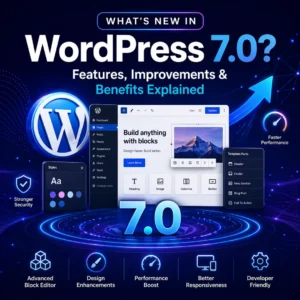
WordPress continues to dominate the content management system (CMS) market, powering millions of websites worldwide. With the release of WordPress 7.0, the platform has taken a significant leap forward in terms of performance, usability, and innovation. This latest version focuses on enhancing user experience while introducing smarter tools for developers, content creators, and business owners.
Over the years, WordPress has evolved from a simple blogging platform into a powerful website-building ecosystem. From the introduction of the Gutenberg editor to full-site editing capabilities, each update has focused on improving flexibility and scalability. WordPress 7.0 builds on this foundation by refining existing features and introducing modern technologies like AI-driven tools and advanced optimization techniques.
Enhanced Block Editor (Gutenberg Updates)
The block editor receives major improvements in WordPress 7.0. It is now faster, more intuitive, and offers better customization. Users can easily design complex layouts without relying heavily on third-party page builders. New block patterns, reusable templates, and improved drag-and-drop functionality make content creation seamless.
Improved Site Performance
Performance has been a core focus in this update. WordPress 7.0 introduces optimized database queries, lazy loading enhancements, and better caching mechanisms. These updates ensure faster loading times, which is crucial for both user experience and search engine rankings.
Advanced AI Integration
One of the standout features is AI integration. WordPress 7.0 offers built-in AI tools that assist in content generation, image optimization, and even SEO suggestions. This helps users create high-quality content more efficiently without depending on multiple plugins.
Better Security Enhancements
Security has been strengthened with improved authentication systems, enhanced encryption protocols, and automatic vulnerability detection. These updates help protect websites from modern cyber threats and reduce dependency on third-party security plugins.
The user interface in WordPress 7.0 is cleaner and more user-friendly. Navigation has been simplified, making it easier for beginners to manage their websites. The dashboard now offers better customization options, allowing users to prioritize tools and widgets based on their workflow.
Additionally, accessibility improvements ensure that users with different needs can navigate the platform more efficiently. This makes WordPress more inclusive and adaptable for a global audience.
Search engine optimization has become more integrated within the core system. WordPress 7.0 introduces improved schema support, faster indexing capabilities, and better mobile optimization. Clean code structure and improved page speed directly contribute to higher search rankings.
The platform also provides basic SEO recommendations, helping users optimize meta tags, headings, and content structure without requiring advanced technical knowledge. This is especially useful for small businesses and freelancers.
Developers benefit significantly from WordPress 7.0. The update includes cleaner APIs, improved REST API performance, and better compatibility with modern frameworks. These enhancements make it easier to build custom themes, plugins, and headless CMS applications.
Additionally, the introduction of advanced debugging tools allows developers to identify and fix issues quickly. This reduces development time and improves overall project efficiency.
Upgrading to WordPress 7.0 offers multiple advantages:
These benefits make WordPress 7.0 a strong choice for businesses aiming to stay competitive in the digital space.
Compared to earlier versions, WordPress 7.0 delivers noticeable improvements in speed, functionality, and flexibility. While previous updates focused on introducing new features, this version emphasizes refinement and efficiency.
For example, the block editor is now more stable and powerful, while performance improvements reduce the need for additional optimization plugins. Security upgrades also make it more reliable than older versions.
WordPress 7.0 represents a major step forward in the evolution of website development. With its focus on performance, AI integration, security, and user experience, it provides a comprehensive solution for modern web needs. Whether you are a beginner, developer, or business owner, upgrading to WordPress 7.0 can significantly enhance your website’s efficiency and growth potential.